 6 days
The Nayara Classic
Tarangire's elephants, the Ngorongoro Crater floor and two full days in the central Serengeti. If you have one week and one shot at…
$2,780per person, from
View
The endless plains
14,763 km² of grass, granite kopjes and the greatest terrestrial mammal migration on earth.
Size
14,763 km²
Established
1951 · UNESCO World Heritage Site
Getting there
8 hours from Arusha, or 1 hour by light aircraft
Known for
Wildebeest, zebra, lion, cheetah, leopard, spotted hyena, elephant, giraffe, over 500 bird species
The place
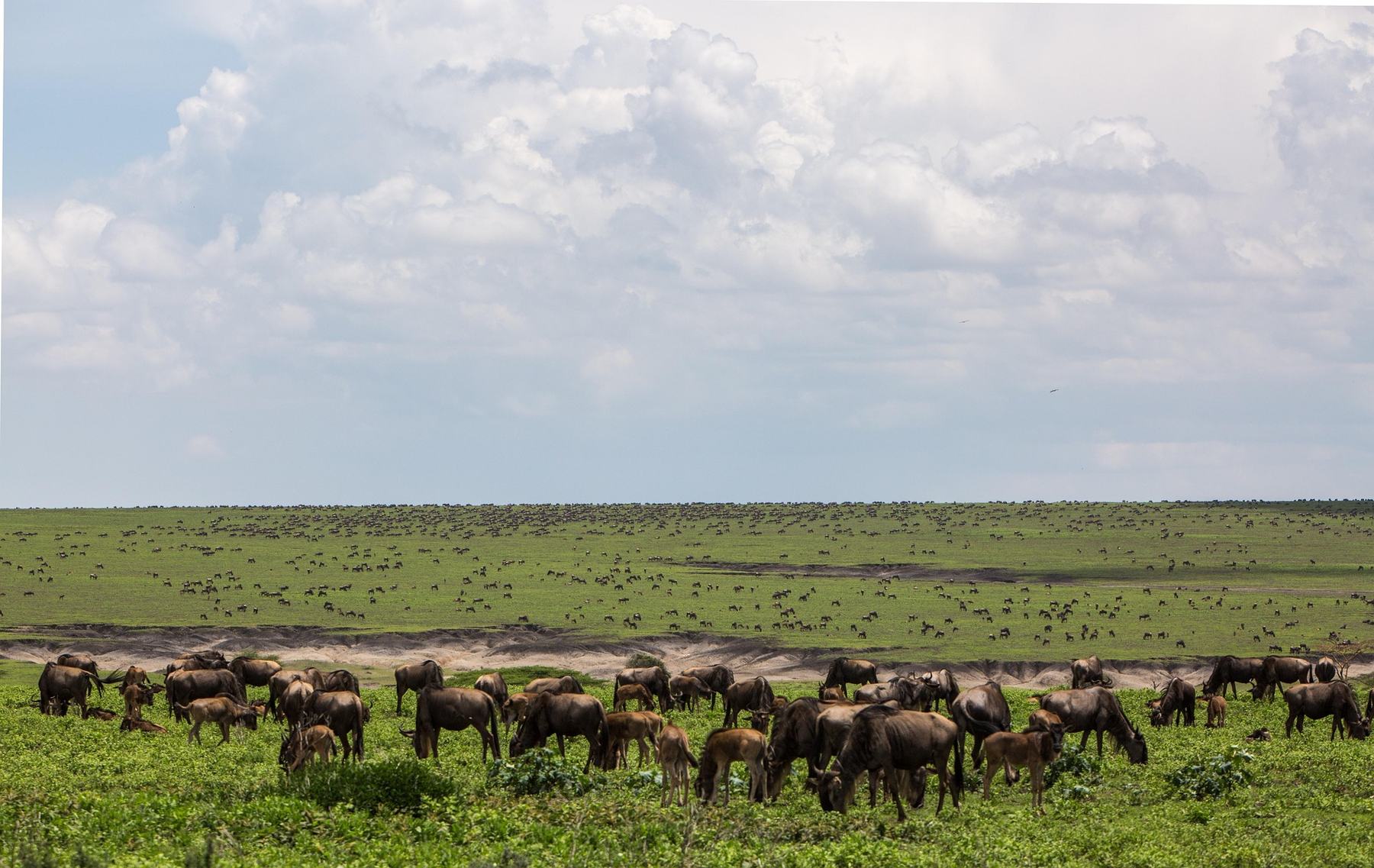
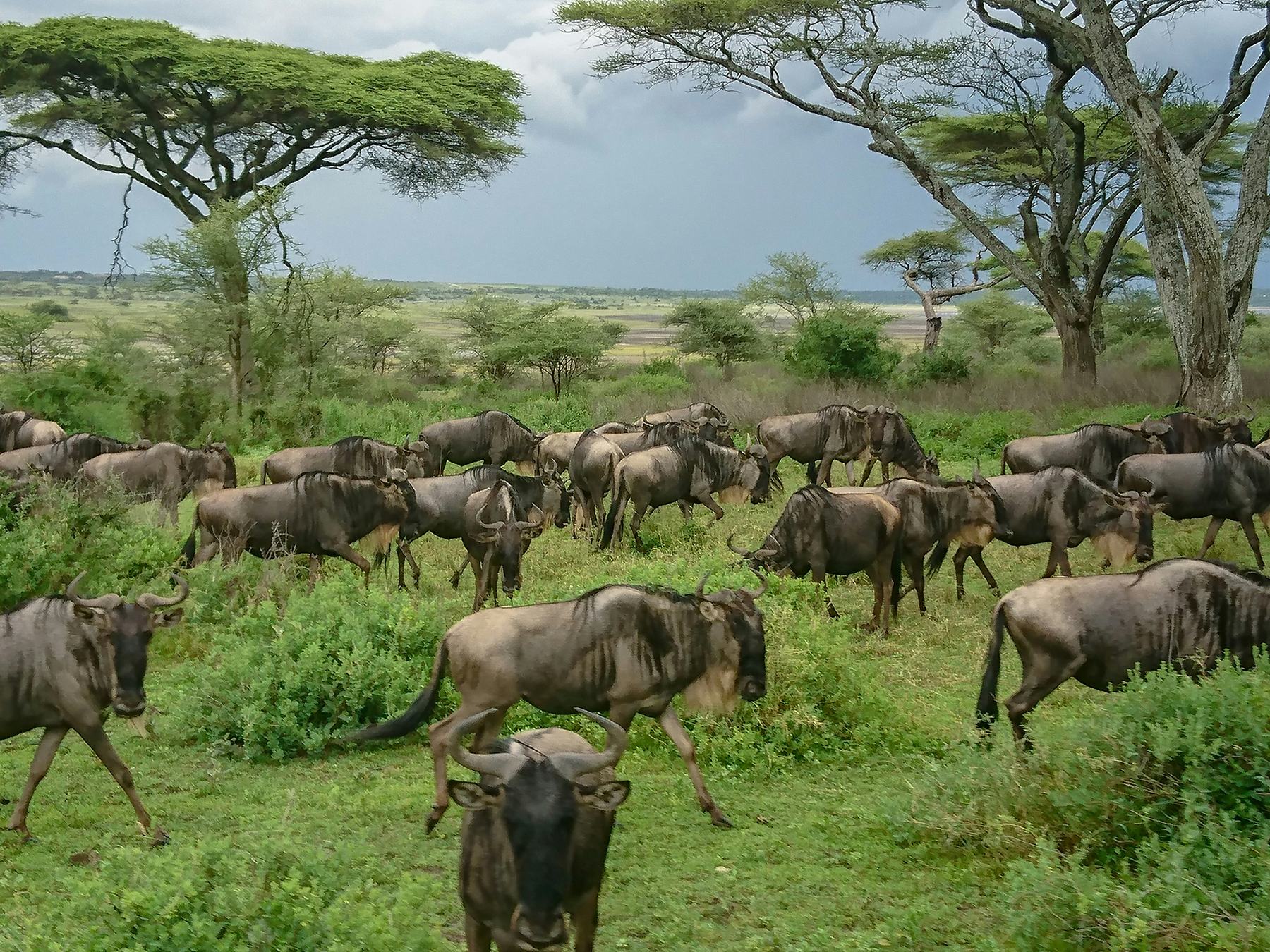
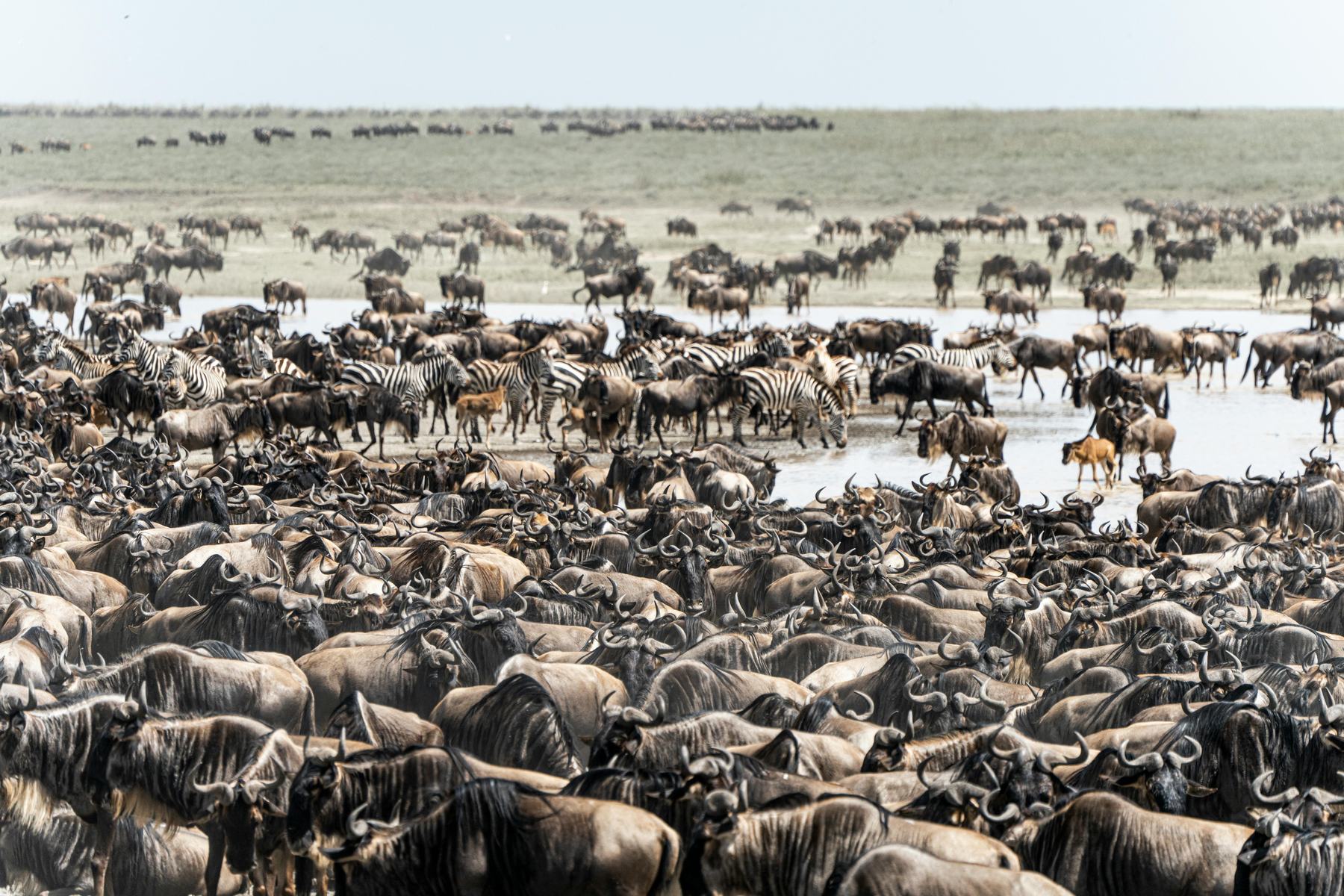
Serengeti means siringet in Maa — the place where the land runs on forever — and nothing prepares you for how literally that is meant. The park alone covers 14,763 square kilometres; the wider ecosystem, spilling into the Ngorongoro Conservation Area, Loliondo, Grumeti, Ikorongo and Kenya's Maasai Mara, is nearly double that. Some 1.3 million wildebeest and 250,000 zebra move through it in a continuous clockwise circuit, following rainfall they can apparently smell from fifty kilometres away.
Why go
The herds are somewhere in this ecosystem every day of the year. The skill is knowing where — short-grass plains in February, the western corridor in June, the Mara River from late July.
The Serengeti holds roughly 3,000 lions, the largest population in Africa, plus around 1,000 leopards and the continent's most-studied cheetah population.
Away from Seronera in high season you can drive for an hour without seeing another vehicle. We build itineraries that use that.
The only place in Tanzania where a dawn balloon flight is worth the money — the scale of the plains is only really legible from the air.
The ground
Where you sleep inside a park matters more than most people realise. These are the distinct areas and what each is good for.
Everything from public campsites at Seronera to mobile tented camps that follow the herds and permanent luxury lodges built into the kopjes. For the migration we almost always recommend a mobile camp — it puts you inside the action rather than an hour's drive from it.
The permanent water and highest resident predator density. Busiest, and still extraordinary.
December to March. Calving season, and the best cheetah country in the ecosystem.
May to July. Crocodile-heavy crossings on the Grumeti and far fewer vehicles.
Late July to October. Mara River crossings, riverine forest and elephant.
Resident game year-round in beautiful kopje country. Very quiet.
When to visit
Ngorongoro Crater and Tarangire complete the classic circuit. Add Lake Natron for a wilder loop, or fly straight to Zanzibar for a beach finish.
Gallery
Trips that include it
6 days
Tarangire's elephants, the Ngorongoro Crater floor and two full days in the central Serengeti. If you have one week and one shot at…
$2,780per person, from
View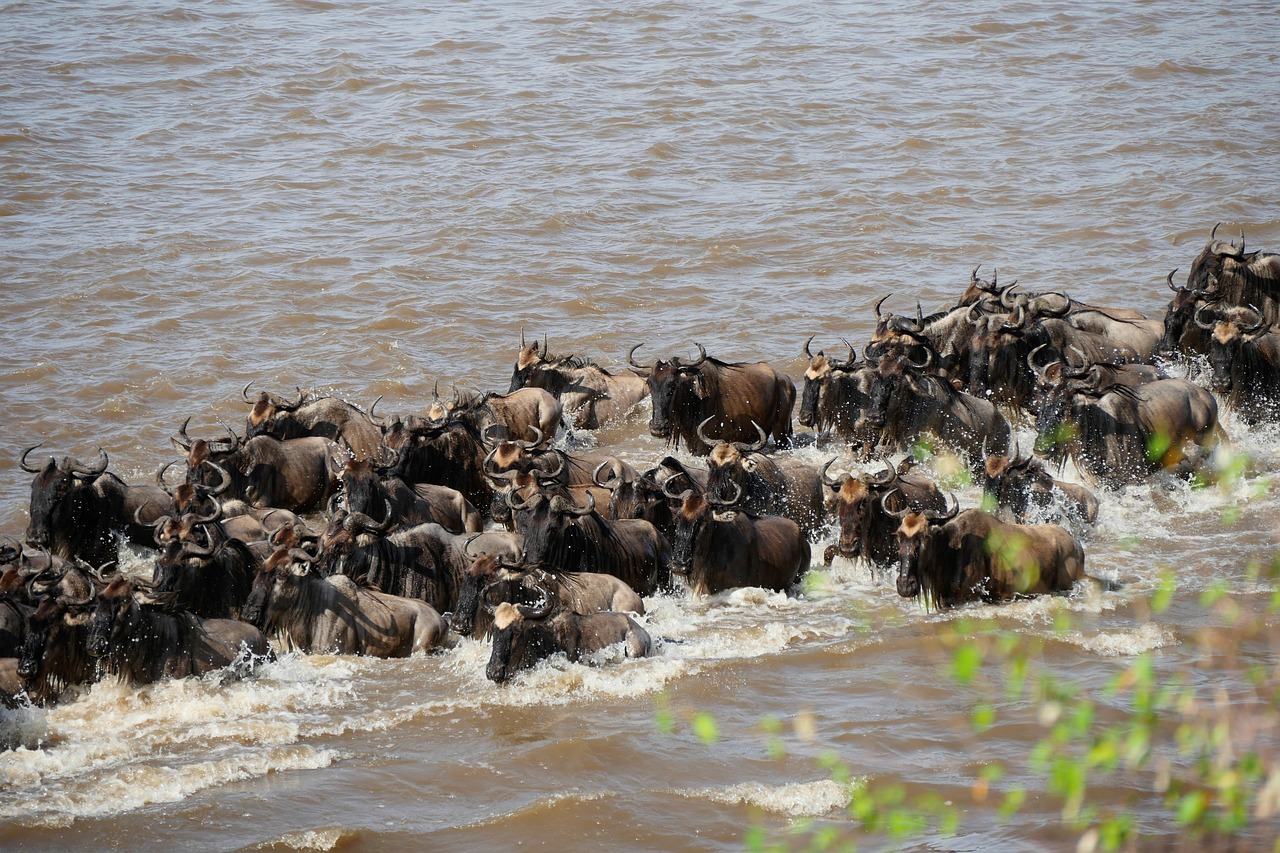 8 days
July to October in the far north, camped within twenty minutes of the Mara River. We move with the herds, not to a fixed schedule…
$4,690per person, from
View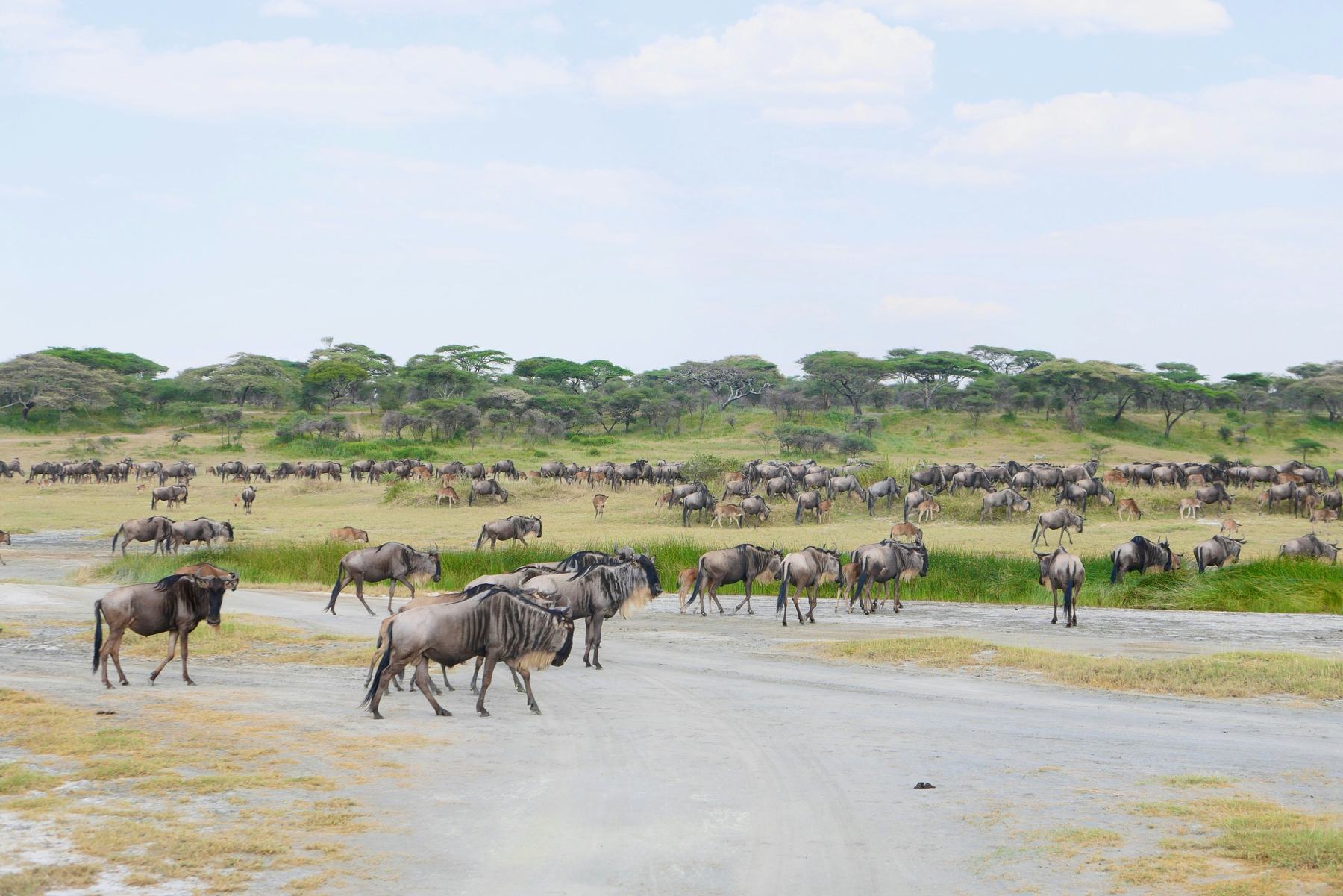 7 days
Roughly 8,000 wildebeest are born a day in February on the short-grass plains around Ndutu. Where there are calves there are…
$3,950per person, from
ViewKeep exploring
The world's largest intact volcanic caldera, holding around 25,000 large animals on a 260 km² floor.
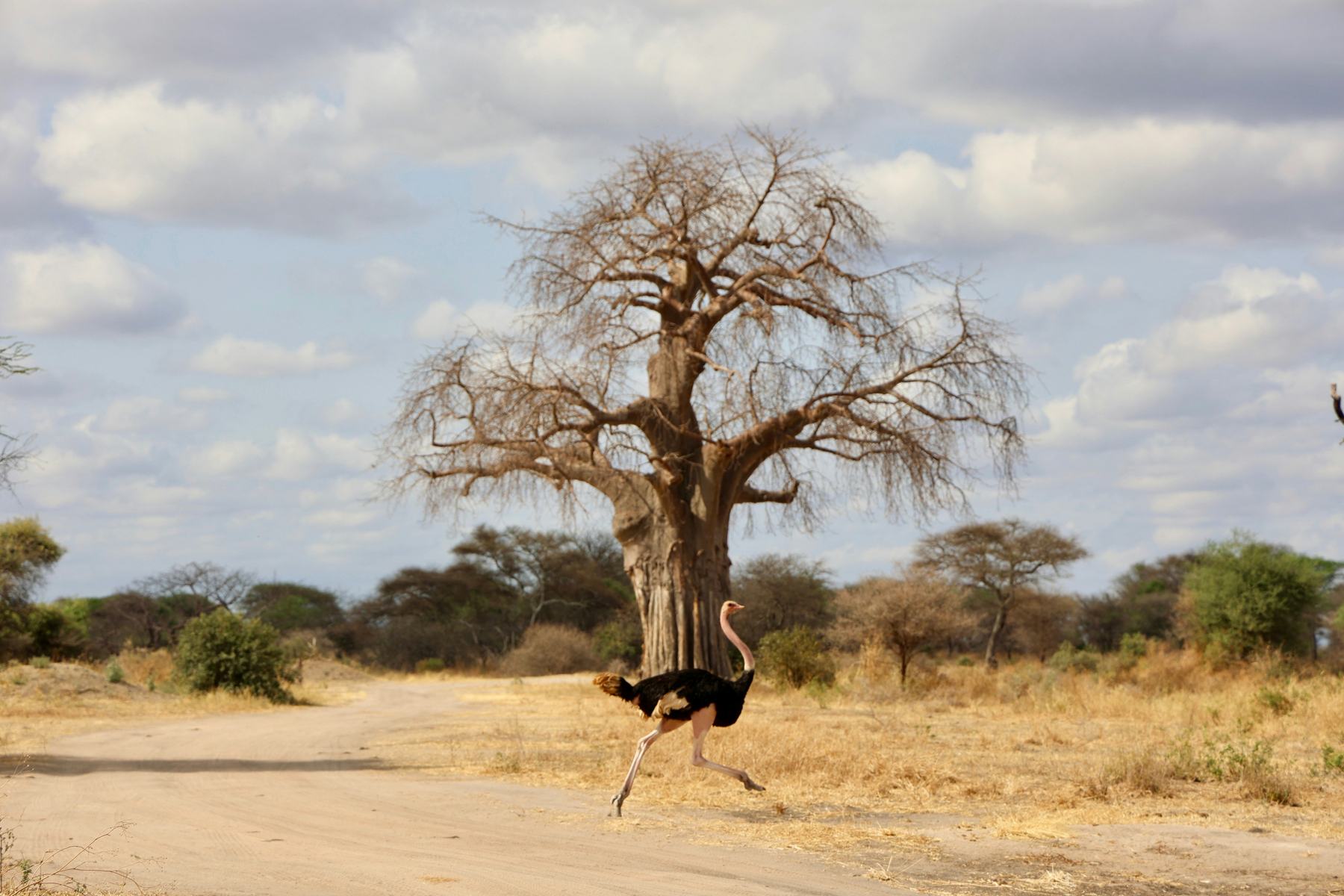
2,850 km² of baobab country holding the densest dry-season elephant population in northern Tanzania.
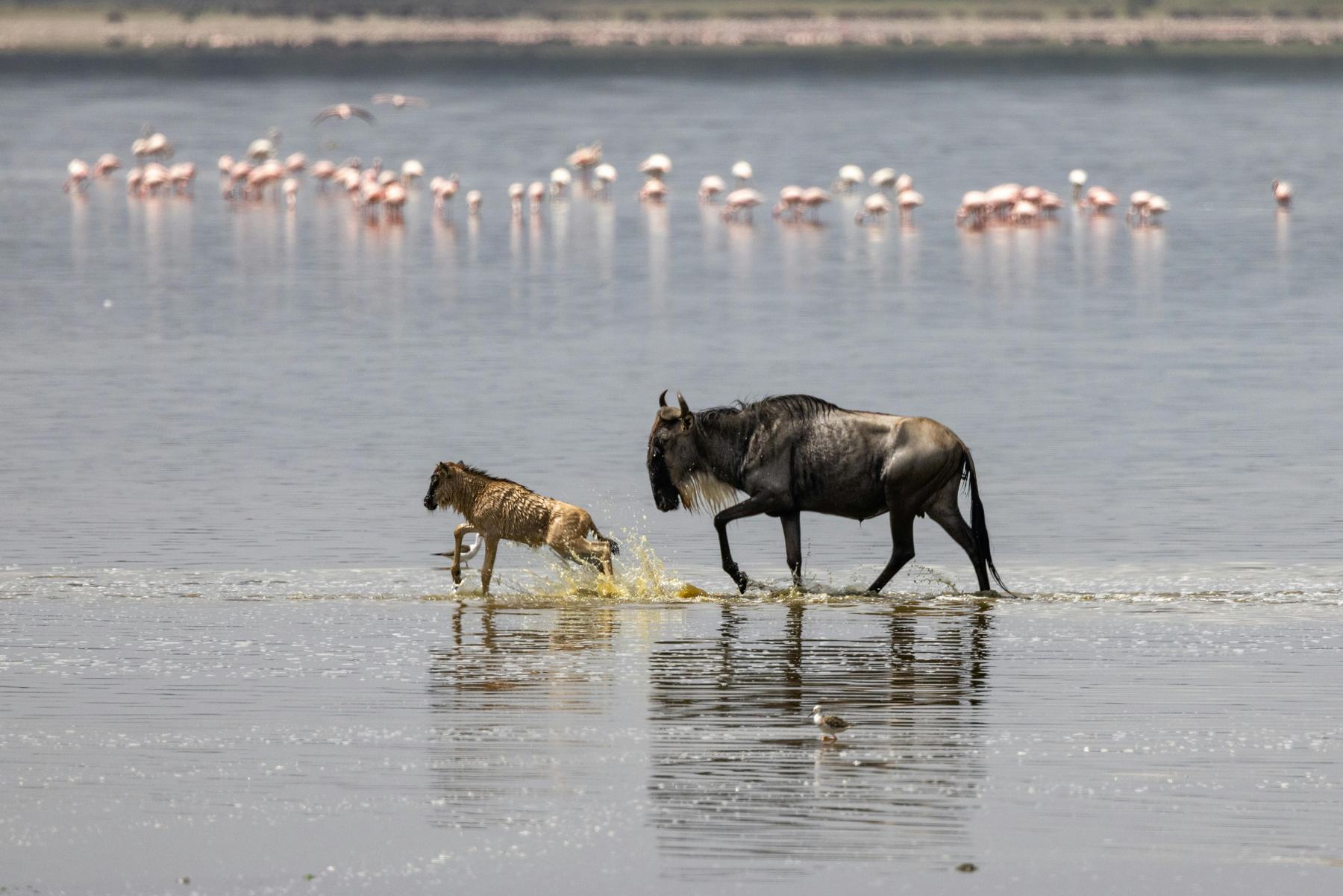
A narrow 330 km² strip between the Rift wall and an alkaline lake — and a park you can walk, cycle and drive at night.
Go there
Tell us how long you have and we will show you how Serengeti fits into a route that works — and how many nights it really deserves.